copy link
2 MINS READ
last updated Jan 30, 2026
mirka re:cycle: how a team of ux designers predicted a global manufacturer’s confidential roadmap
project type
innovation challenge (m. inc/mirka)
company
mirka
industry
surface finishing
role
user experience design
date
Dec 10, 2025
—
Jan 6, 2026
team
Cilia Kafi, service designer
Muhammad Amir, user experience designer
background
we entered the mirka innovation challenge with a mandate to "boost the green transition" in the surface finishing industry.
we were not industrial designers, nor did we have prior experience in surface finishing. we were user experience designers who saw a different kind of opportunity.
we aimed to refactor the existing mymirka app — which was functioning primarily as a simple connectivity tool — into the backbone of a circular economy. we proposed "mirka re:cycle," a platform transforming hardware sales into "tools-as-a-service."
by leveraging existing iot sensors, we designed a system for predictive maintenance, automated trade-ins, and circular subscriptions.
we did not win the challenge. the feedback was striking: our proposal wasn't considered "innovative" enough because the company was already privately moving in this exact direction. rather than a rejection, we view this as the ultimate validation: our design instincts, market analysis, and user research were so accurate they mirrored the confidential r&d roadmap of a global industry leader.
the challenge
the surface finishing industry operates on a linear "take-make-dispose" model. tools are mass-produced, used intensely, and often discarded prematurely without viable recovery routes. global e-waste reached 62 million tonnes in 2022, with only 22.3% properly recycled.
from a digital perspective, the team identified a 'churn' problem. the existing mymirka app followed a "download-setup-and-abandon" pattern. while it offered basic vibration monitoring, it lacked features to encourage long-term retention or lifecycle management.
user research and strategy
we analyzed two distinct user segments to understand why they weren't engaging with circular models:
the professional: needs uptime and safety. they are burdened by eu regulations regarding vibration exposure.
the occasional user (sme/hobbyist): needs access, not ownership. they often buy cheaper, disposable competitor brands because professional mirka tools have a high upfront cost.
the solution: mirka re:cycle
the solution transforms the mobile app into a "circular lifecycle orchestrator". it introduces four core features:
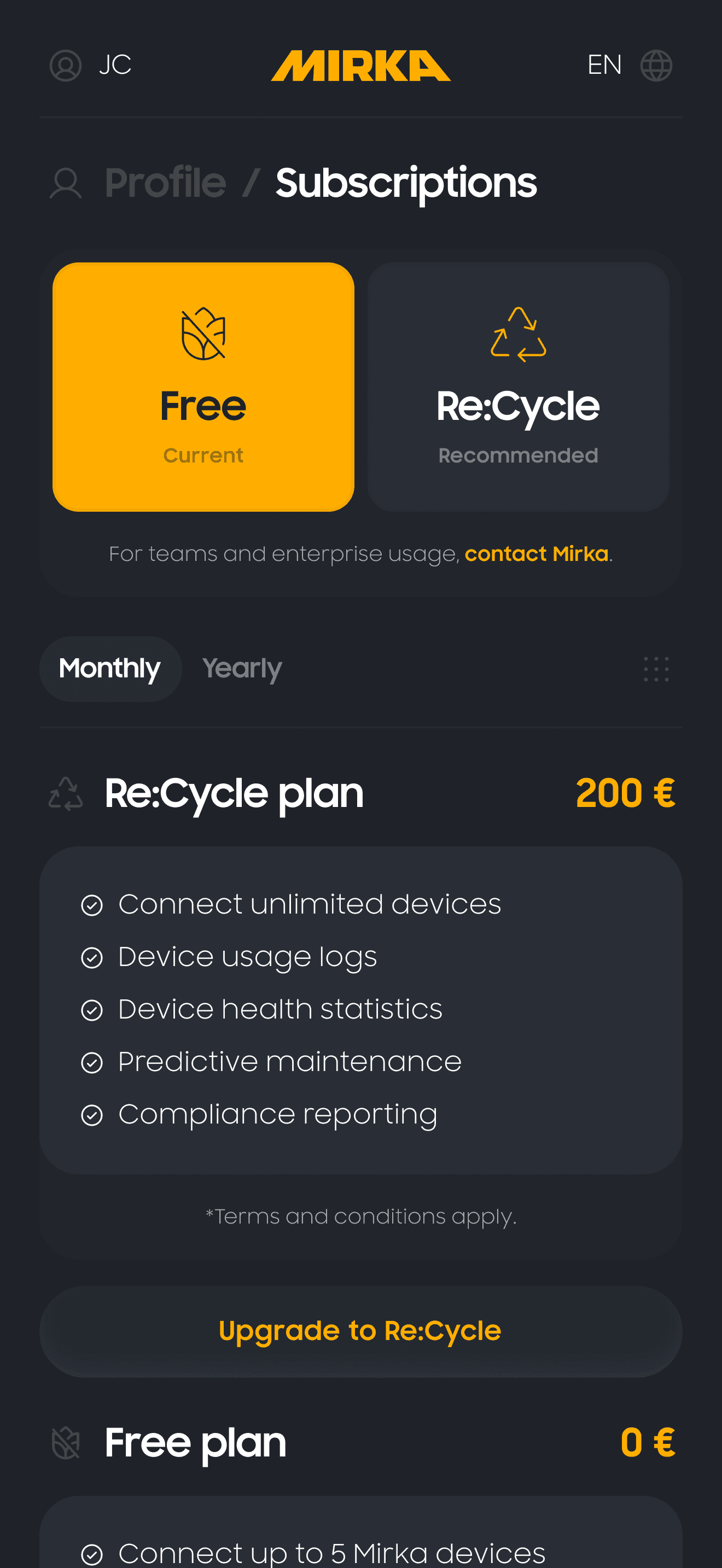
flexible access (subscriptions)
instead of forcing a purchase, users can choose 'rent' (daily rates) or 'subscribe' (monthly tiers).
free plan: basic connectivity for up to 5 devices.
re:cycle plan (€200/mo): unlimited devices, predictive maintenance, and compliance reporting.
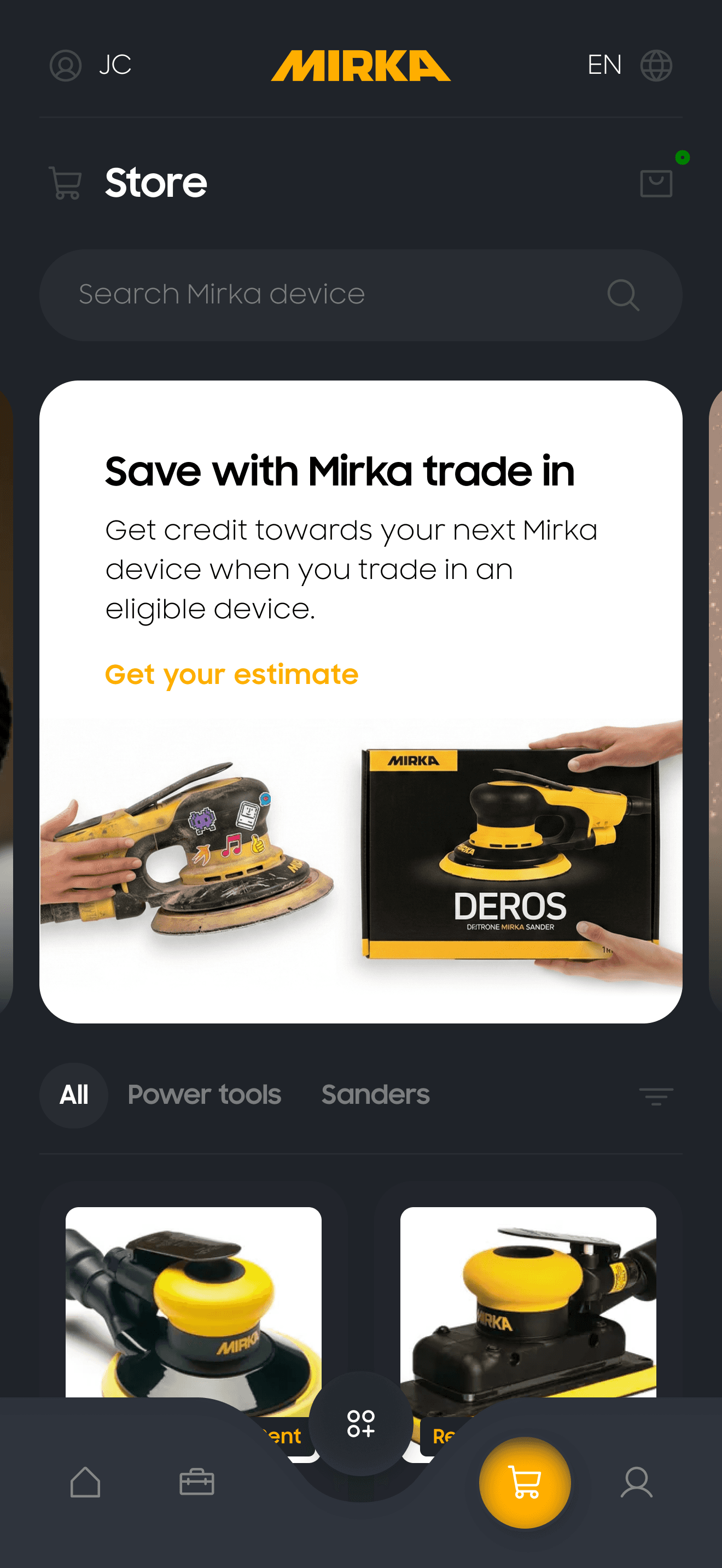
telemetry-based trade-in
a frictionless way to return hardware.
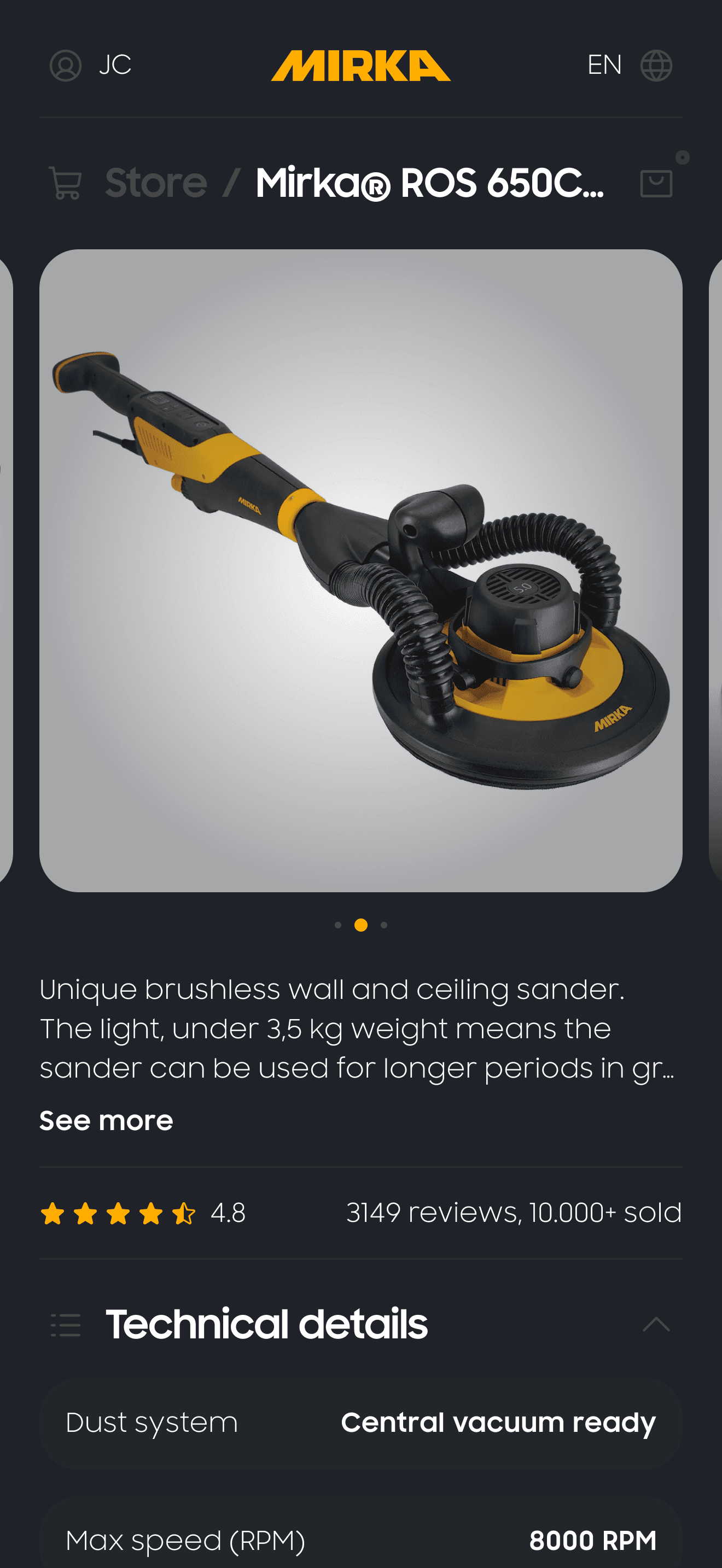
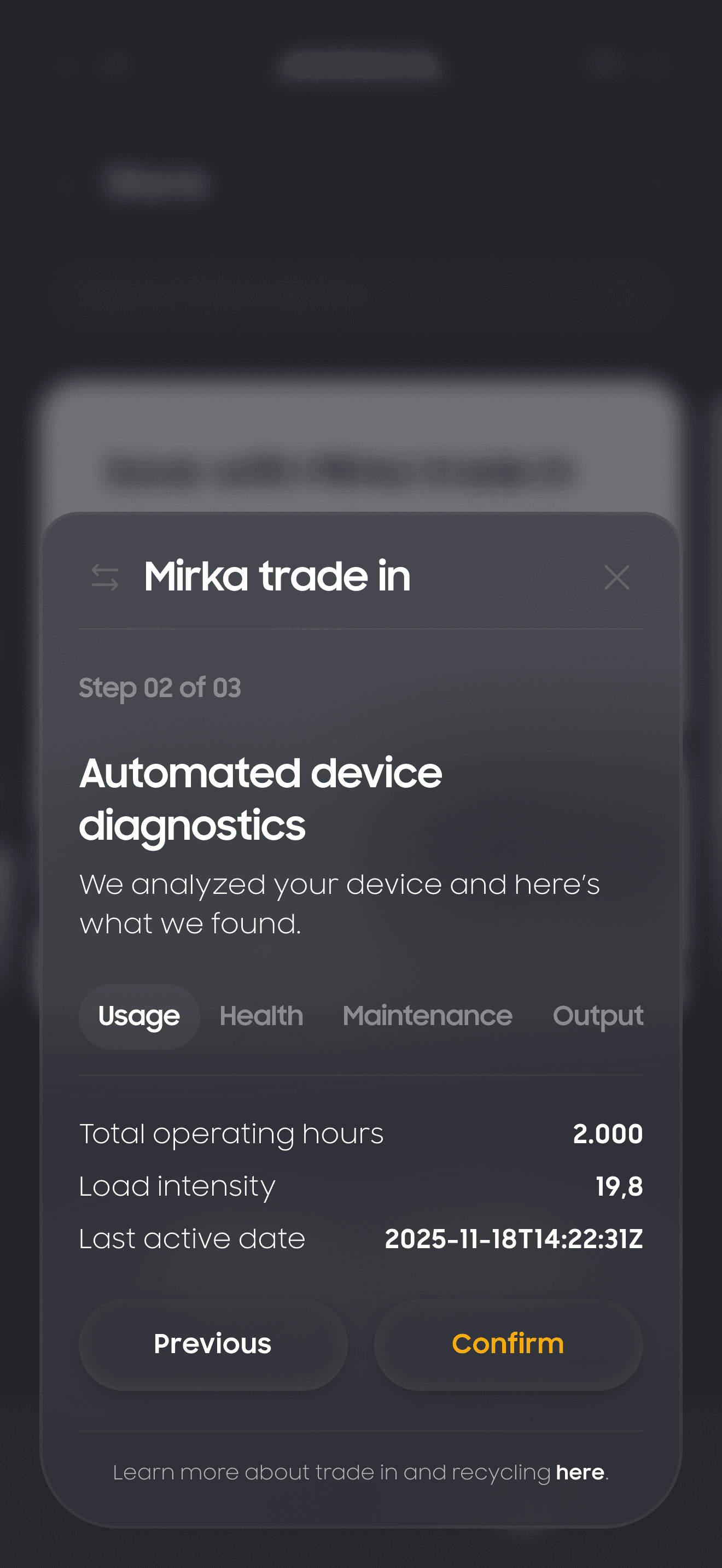
innovation: the app uses the tool’s internal sensors (vibration, motor health, load intensity) to instantly calculate a trade-in value.
result: users get immediate credit (€520 in the prototype example) toward their next subscription, removing the risk of 'lemon' trade-ins for mirka.
predictive maintenance
moving from reactive to proactive.
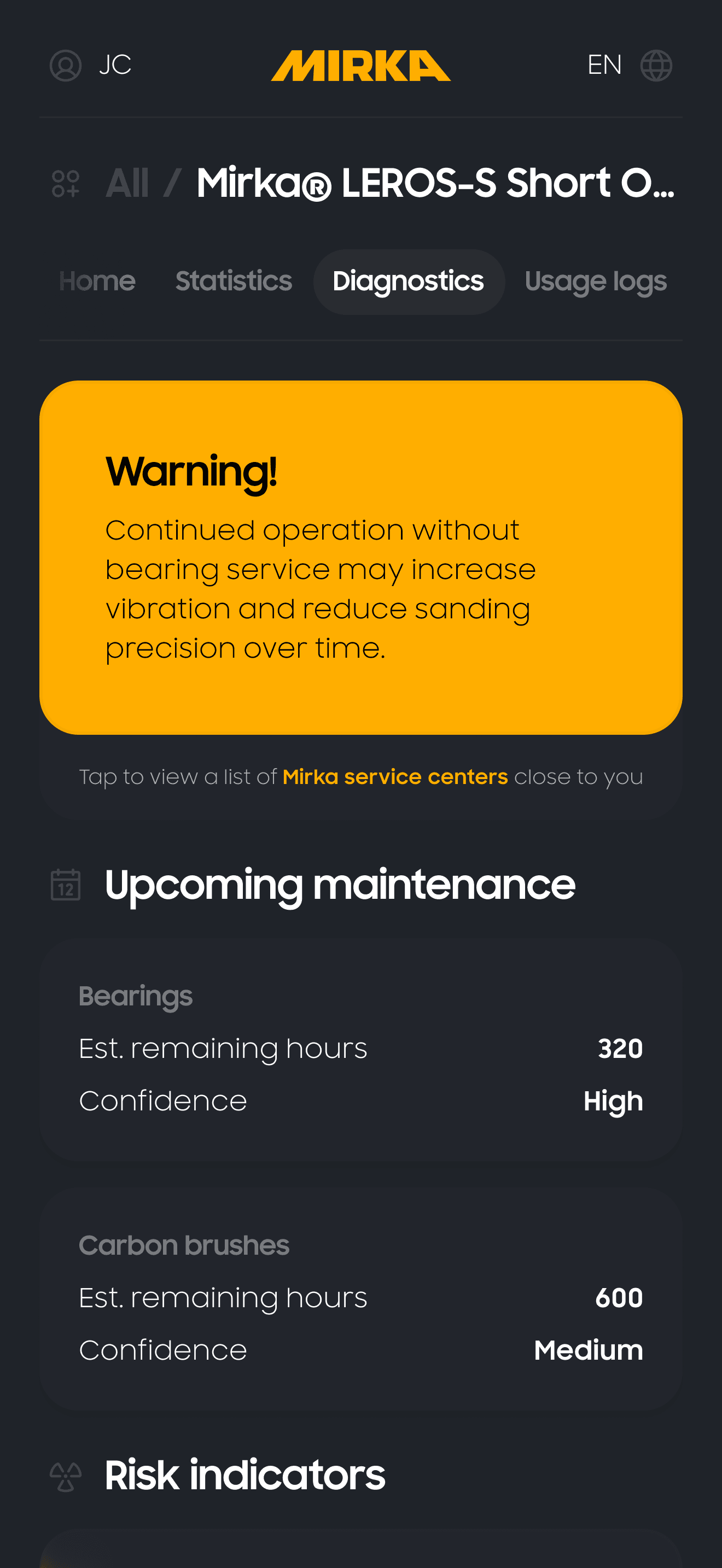
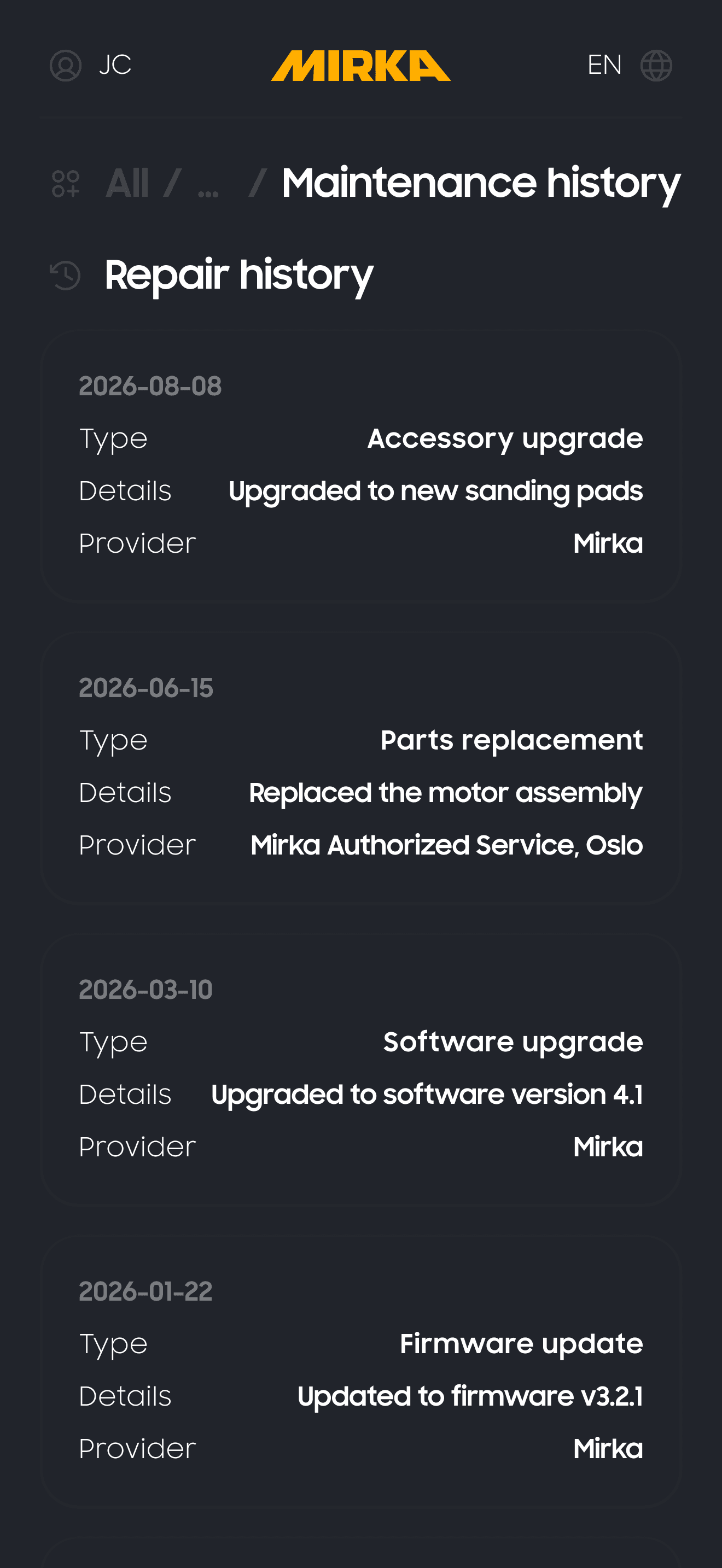
user interface feature: the dashboard displays "risk indicators" (e.g., thermal stress events) and "estimated remaining hours" for specific parts like carbon brushes.
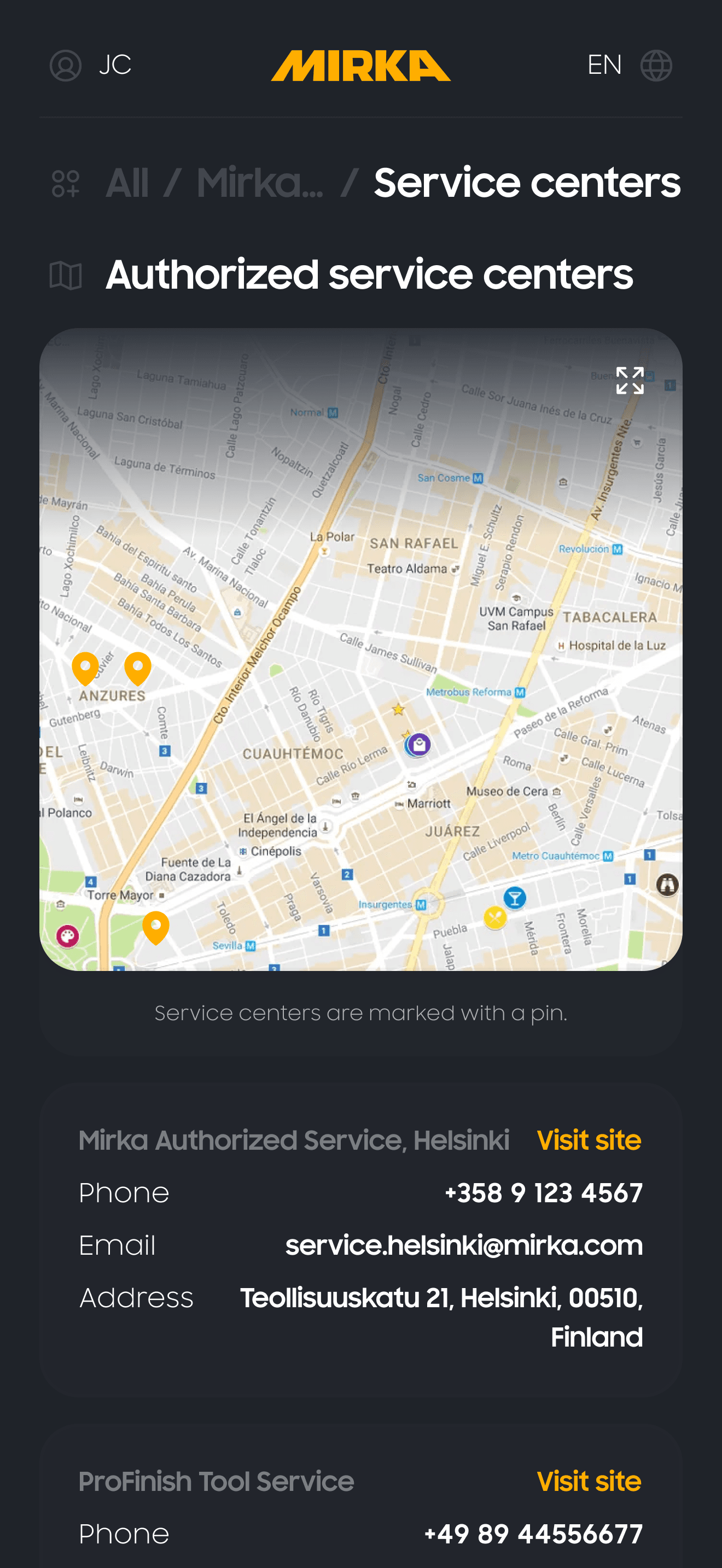
service integration: a map view connects users directly to authorized service centers.
compliance reporting
targeting the b2b sector, this feature generates pdf reports on vibration exposure ($m/s^2) and rpm history, optimized for eu safety regulations.
execution
we adopted a high-contrast dark mode aesthetic to match the industrial environments where these tools are used.
the dashboard: a 'cockpit' view showing real-time vibration ($m/s2) and rpm, with immediate alerts for high exposure levels to ensure eu safety compliance.
the service map: an integrated map view that guides users to authorized service centers when a risk indicator lights up, closing the gap between digital warning and physical repair.
the trade-in modal: a frictionless, three-step wizard (select device / diagnostics / credit) designed to minimize the cognitive load of returning hardware.
business viability
we knew a circular model would only work if it was profitable. we conducted a porter’s five forces analysis and built a 3-year profit and loss simulation.
the model: we projected that while year 1 would incur a €4.8m investment loss, the shift to recurring subscription revenue would generate a €5.5m net profit by year 3.
the competitive moat: unlike competitors like bosch or makita, our solution created "ecosystem lock-in" by using proprietary telemetry data for valuation; something a third-party recycler couldn't replicate.